HexStrike is a simultaneous combat game played on a hex grid. When you are up to act, you commit one active card, one passive card, a legal rotation, and an optional adrenaline spend. That locks in a short timeline of actions that will resolve beat by beat alongside everyone else. The core goal is simple: force opponents off the island or leave them stranded in the abyss with no safe return.
2. Setup
Deck Construction Rules
Each deck contains: 1 character, 4 movement cards, and 12 ability cards.
No duplicate cards are allowed.
Step is mandatory and cannot be removed.
Each deck may include up to one Signature Move and up to two Signature Abilities. Both use gold titles.
Current Signature Abilities: Bow Shot, Vengeance, Spinning Back Kick, Burning Strike, Druidic Presence, Parry, and Smoke Bomb.
Ability card order is fixed. There is no shuffling.
Starting State
Place characters on designated starting land hexes, facing each other.
Each player draws 4 movement cards and 4 ability cards.
3. Game Flow
The game advances on a shared timeline of beats. In practice, each cycle follows this rhythm:
Check the earliest open beat for each player.
Any player who is up to act refreshes if they are safely on land.
All players tied for that earliest open beat commit at the same time.
The server resolves the beat in timing order.
The timeline advances until the next open decision point or prompt.
4. Beat Phase - Detailed Explanation
4.1 Refresh Phase
A refresh happens when your earliest open beat is an or on land. It is the clean reset point between committed plays.
A normal refresh does three things:
Clear exhausted movement cards.
Draw ability cards back up to your current hand limit.
Sync your movement hand to match your current ability count, up to four.
Some special states change that routine. Focus can reduce the refresh cap, and Ethereal Platforms let you refresh over abyss as though you were on land. If you are in the abyss with no legal play, ledge-grab and no-cards loss checks decide whether you escape or lose.
A is a Signature Refresh. It still functions as a normal refresh beat, but if the refresh happens the active card goes to the top of your deck instead of the bottom. Some cards can still mention a normal in their text for separate effects.
4.2 Simultaneous Play Phase
Every player tied for the earliest open beat chooses at the same time:
1 active card
1 passive card of the opposite type (movement card vs. ability card)
1 legal rotation
1 adrenaline submission from 0 to your current adrenaline (max 10).
Your submitted adrenaline is locked when you confirm the play. It helps break ties inside the same action class and is spent when the action set begins with its chosen rotation. If you leave it alone, the default submission is 0.
If multiple players are due at once, their plays stay hidden until all required submissions arrive.
4.3 Beat Resolution
Resolve chosen rotations and other start-of-action effects first.
Resolve actions by timing:
first, then , then
.
When actions share the same timing, throws, blocks, attacks, movement, and other effects follow the tie-break rules in Section 13.
If a character is interrupted before their action resolves, that beat may collapse into a hit or stun window instead of the planned action.
4.4 End of Beat
Advance surviving action sets, apply any pending interaction results, and stop as soon as the game reaches the next decision point.
5. Anatomy of a Card
Every card is built from the same parts. This map labels the key card regions once so later sections can focus on play
flow.
1Card NameThe card's name and identity.
2Rotation LimitIndicates the legal rotations for when you play this card.
3Action TimelineOrdered action tokens that resolve beat by beat.
5Trigger Text (optional)Optional in-hand reveal text and trigger condition.
6Active TextThese are specific rules that modify what actions in the action timeline do.
7Passive TextModifier text this card contributes when paired as passive.
8Damage/KBF Badges and together show the base damage and knockback factor for this card.
6. Play Details
During the simultaneous play phase, players who are up for a turn select 4 things: an active card, a passive card, a rotation, and an adrenaline submission. The active and passive cards must be of opposite type; a movement (green) card, and an ability (purple) card. The rotation selected must be allowed by the rotation limit of the active card, where * means any rotation. Adrenaline submissions are integers from 0 to 10 and cannot exceed your current adrenaline pool at that beat.
Once all players have simultaneously selected and revealed, this selection will first rotate the player's character in the chosen direction relative to their current facing direction, then beat-by-beat, along with all other players, enact the actions on the active card's timeline. The active card's passive text (on the bottom) is completely ignored during this time, whereas the passive text on the passive card will modify the active card based on the text. If there is no passive text, the active card plays out unchanged. Submitted adrenaline is spent at that rotation step even if the play is immediately interrupted afterward. Adrenaline gain/loss effects modify your current pool, not the already submitted adrenaline value for that action set.
1Rotation DialSelect which way (relative to your character's current rotation) your character will face before starting the action timeline. Legal options may be limited by the active card selected.
2Active Card SlotThe "Action Timeline" of the card placed here will be used to determine beat-by-beat actions for this character. Active text, damage, and KBF of the card also apply.
3Passive Card SlotThe "Passive Text" of the card placed here will modify the active card. NO OTHER PART of the passive card contributes to this play. Note: If the active card was of type "movement" (green background) then the passive card must be an "ability" card (purple background), and vice versa.
7. Combat & Resolution Details
Hit Resolution
If the defender blocks correctly, the attack has no effect.
If the attack is a throw, normal knockback is replaced by throw handling and the attacker chooses the throw direction.
Otherwise, apply damage and knockback.
Damage
Damage is added to the target's accumulated damage. There is no upper limit.
Knockback
After damage is applied, calculate knockback using the Knockback Factor .
KBF = 0: 0 hexes.
KBF = 1: 1 hex.
KBF > 1: scale from the target's accumulated damage, minimum 1.
Knockback moves the defender directly away from the attacker. Obstacles stop movement early.
Knockback can also create interruption windows that delay or cancel the target's planned action sequence.
If a character ends 5 or more hexes from the island edge, they lose.
8. Cards in Hand Economy
HexStrike tracks two linked hands: your ability hand and your movement hand.
Your ability hand is the main limit. Your movement hand then mirrors that count up to four cards.
Ability cards cycle under the deck when used. They do not exhaust.
Movement cards exhaust on use and usually come back through refresh.
If an effect changes your ability hand size, your movement hand resyncs to match the new count.
Discard prompts and hand-trigger costs can pull from both hands when required.
9. Trigger Text
Some cards can fire while still in your hand. When that condition happens, the game pauses and offers you a reveal prompt before asking for any discard cost.
Example - Burning Strike:
"If Burning Strike is in your hand when you land an attack, you may reveal it and discard it along with a movement card to place a fire hex on all attacked hexes."
In short: trigger text tells you when the offer appears. The reveal, discard, and effect all happen through that prompt flow.
10. Hexes & Tokens
Hexes define terrain and tokens are board objects placed by card effects. Both persist and resolve by their rules.
Land Hex
Land hexes form the playable island. Land is where normal refreshes occur.
Abyss Hex
Abyss hexes surround the island. Characters pushed too far into the abyss lose.
Fire Token
Fire tokens sit on a hex and deal 1 damage each beat to anyone standing there.
Flora Hex
Flora sits on land indefinitely. If fire is placed onto Flora, the Flora disappears and the fire stays. If Flora is placed onto fire, the fire disappears and the Flora stays. If both would be placed at the same time, fire stays. Flora cannot be placed on abyss.
Ethereal Platform
Ethereal Platforms sit over abyss. If you reach one on an , it acts like temporary land for refresh, then disappears.
Arrow Token
Arrow tokens travel forward one hex per beat in the direction they face. They deal 4 damage with a KBF of 1, stop on a valid block, and disappear after a hit.
11. End of Game
In 1v1 play, the game ends immediately when one player loses.
A character is 5 or more hexes from the island edge.
A player reaches an open beat in the abyss with no legal play and no escape route such as ledge grab.
In Free-For-All games, eliminated players respawn after 10 beats in the
center hex of the island with 0 damage and a full hand.
For the first 5 beats after respawning, they cannot be knocked back, stunned, or dealt damage.
The last player to hit someone that is eliminated gets a victory point.
First to 2 victory points wins.
12. Symbols & Glossary
Action Symbols
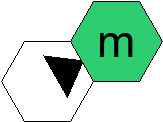
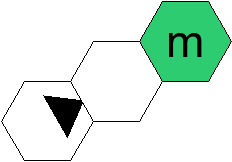
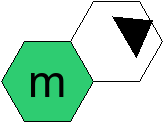
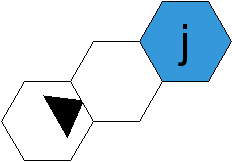
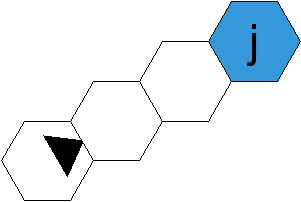
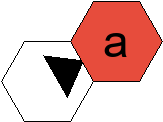
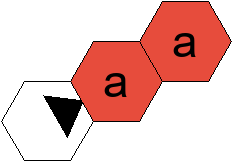
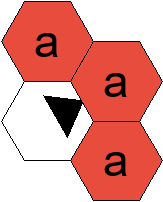
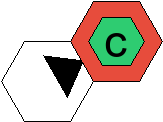
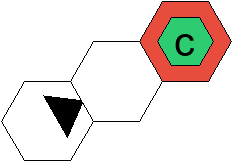
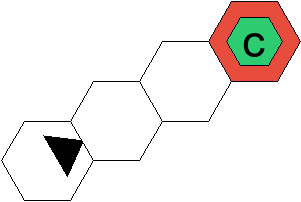
On each beat of the game, every player will have an action they are performing. These actions move forward like clockwork, following the diagrams on those actions (where applicable). Those actions are depicted with symbols like those below. Some symbols are diagrams that show relative positions and actions. For those, the white hex represents your character's location at the time of that beat, the black triangle is the direction that character is facing, and all other hexes are shown relative to that location and direction.
Symbol
Definition
Refresh beat with no committed action.
Signature Refresh beat. Refreshes like , but the active card goes to the top of your deck if that refresh happens.
Wait action. Characters do nothing here.
Move action. Characters move straight forward and stop if obstacles are in the way. They move as far as possible before the obstacle. Other geometries of this type can include: , , and .
Jump action. Unlike move, jump does not stop if obstacles are in the way. However, the jump fails if the target location is occupied. Other geometries of this type can include: and .
Attack action. Deal damage and knockback to any targets on all red hexes. Other geometries of this type can include: , , and .
Block action. Block attacks from the hex directions with the gold lines. Other geometries of this type can include: , , and .
Charge action (attack + movement behavior). First attempts an attack, then attempts a move. Other geometries of this type can include: , , and .
Focus marker/state reference. Puts the card in "focus" state. This places the card to the side and applies its focus text until that card is removed from focus.
Combo window marker. If the attack before this combo symbol was successful, the player can choose to continue the combo. They discard their current active and passive cards and can play another card with a .
Card-text trigger symbols. These mark effect trigger points within an action sequence.
This marks a trigger point in addition to a regular action on a card's timeline.
+X-X
Adrenaline modifier add or subtract from your pool of stored adrenaline, to a minimum of 0 and maximum of 10.
Timing markers. Early resolves before mid, and mid resolves before late.
Other Symbols
In addition to timeline symbols, here are other symbols you will see on cards as shorthands for other words.
Symbol
Definition
X
Draw X: draw X ability cards, then movement hand count syncs to match ability hand size (see hand economy above).
X
Discard X: discard X ability cards, then movement hand count syncs to match ability hand size (see hand economy above).
X
These symbols reference the amount of SUBMITTED adrenaline on this play, and can modify actions.
Damage badge: indicates how much damage this attack deals.
Knockback factor (KBF) stat marker.
T
Throw knockback marker (KBF throw). Uses throw rules instead of normal knockback formula.
Rotation limitation badge. Indicates allowed rotation choices for that active card.
Glossary
Beat
One timeline index containing one entry per player.
Timing
Action phase marker: early, mid, or late.
Active Card
Selected card that supplies action list and base stats.
Passive Card
Selected companion card that modifies active behavior.
Adrenaline
A per-player pool from 0 to 10. You submit an adrenaline value with each action set, and that submitted value is the first tie-breaker within the same action class. It is spent when that committed play applies its chosen rotation.
Signature Move
Gold-title movement card; maximum one per deck.
Signature Ability
Gold-title ability card; maximum two per deck. Current Signature Abilities are Bow Shot, Vengeance, Spinning Back Kick, Burning Strike, Druidic Presence, Parry, and Smoke Bomb.
Refresh
Clearing out old cards, and redrawing a hand (if on land).
Focus
Persistent interaction state that modifies rules while active.
Knockback
Forced movement applied after a hit based on KBF rules.
Ledge Grab
Drawing one ability and movement card if over the abyss, next to land, and having an empty hand.
13. Tie Breakers
Same Beat & Same Timing
Sometimes, actions on the same beat will also have the same "timing" symbol (), or no timing symbol at all. If this is the case, use this order of operations to resolve any ties.
windows resolve first.
Throws resolve before blocks.
Blocks resolve before attacks.
Attacks resolve before movement.
Movement resolves before focus and other special effect beats.
Within the Same Class
Higher submitted adrenaline resolves first.
If tied actions come from different steps of their action sets, the later step resolves first.
If two attacks still tie, the stronger hit resolves first.
If two tied moves try to enter the same hex, they jam and fail.
If tied moves head to different hexes, they resolve together. A move can enter a hex another tied mover is successfully leaving.
14. Quick Reference
Beat Order
Find the earliest open beat.
Refresh if you are safely on land.
Commit simultaneous plays.
Resolve timings and prompts.
Advance to the next decision point.
Damage / Knockback
Apply damage first.
KBF = 0: 0 knockback.
KBF = 1: 1 hex knockback.
KBF > 1: scale from total damage taken, minimum 1.
Throw rules replace normal knockback formula.
Deck Restrictions
1 character, 16 cards total (4 movement, 12 ability).
No duplicates.
Step is required.
Max 1 Signature Move and max 2 Signature Abilities.
Win Condition
Opponent is more than 4 hexes from nearest land, or
Opponent is on abyss at earliest open beat with no cards to play and no ledge grab.
FFA: 2 victory points wins: get victory points by "last hitting" opponents.
 or
or  on land. It is the clean reset point between committed plays.
 first, then
  , then
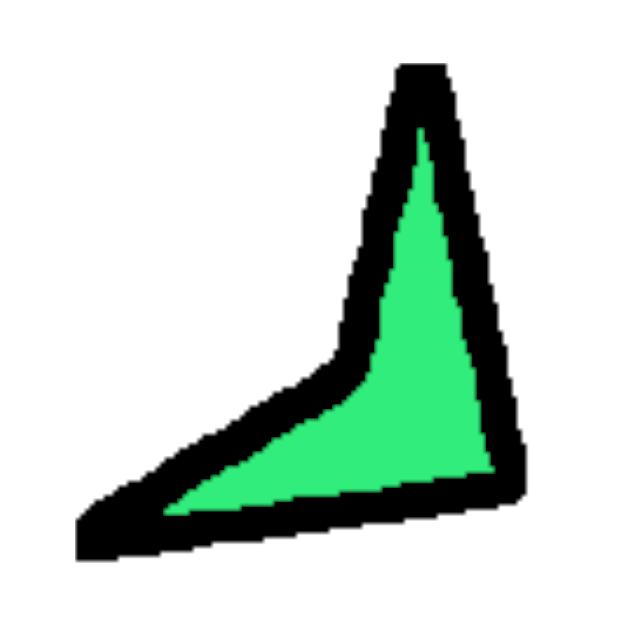 .
.
 and
and  together show the base damage and knockback factor for this card.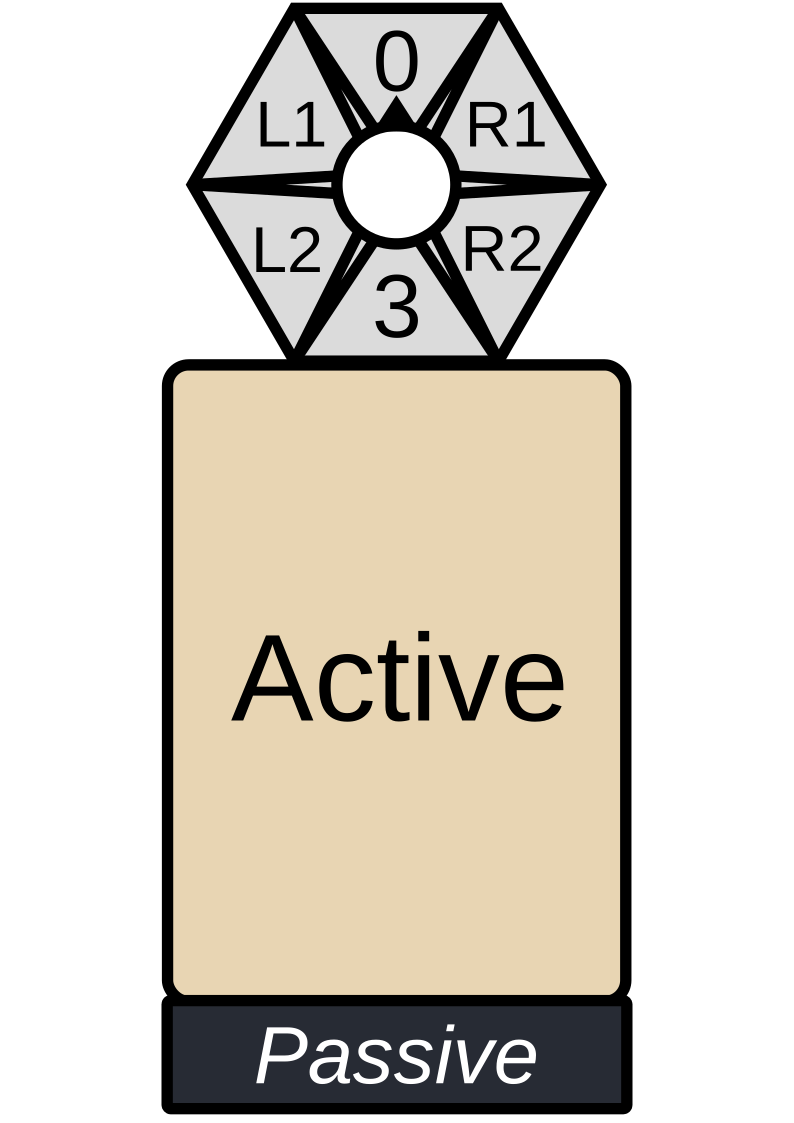



 ,
,  , and
, and 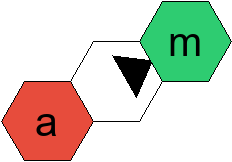 .
.
 .
.
 ,
,  , and
, and 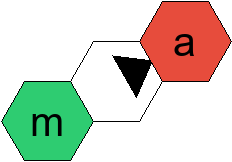 .
.
 ,
,  , and
, and  .
.
 ,
,  , and
, and 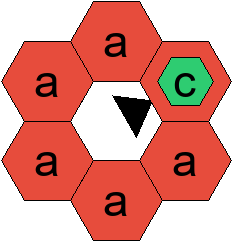 .
.